You’re doing everything right with content and keywords, but your rankings keep falling. What’s the missing link? It’s the company you keep. Your Average Domain Authority reveals the hard truth about your site’s real competitive standing. Stop guessing where you stand and start building the influence that actually moves the needle. This is the reality check your SEO strategy needs.
What Domain Authority Really Measures in Simple Words
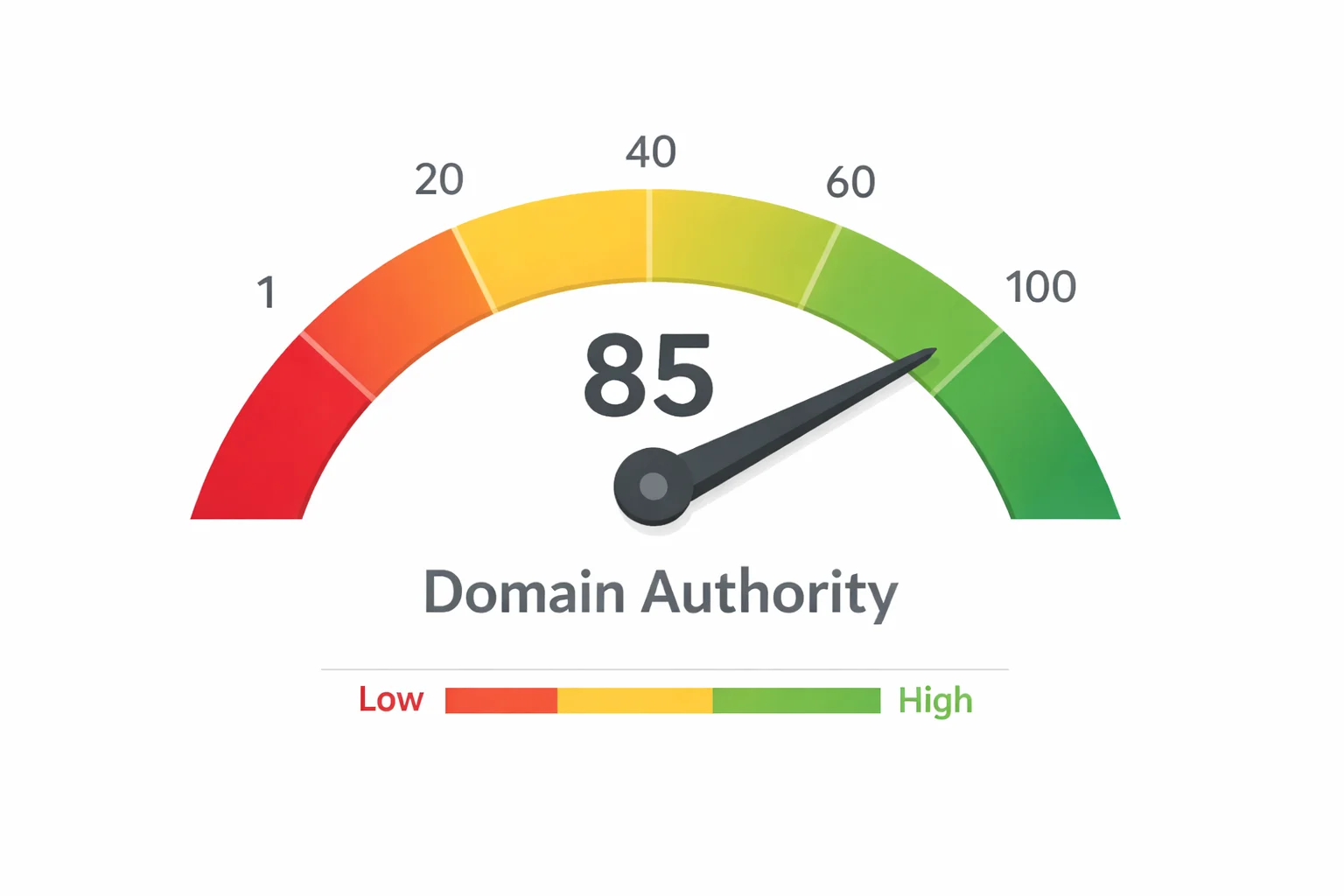
Domain authority means how strong and trusted a website looks to search engines based on links and credibility. It is scored from 1 to 100. A higher score means more trust.
To make it easier
- Authority means trust
- Links mean votes
- Quality links mean strong votes
Search engines look at who links to you, how trusted those sites are, and how natural your link profile looks.
Key factors behind the score
- Quality of backlinks meaning links from trusted websites
- Relevance means links from similar topics
- Link diversity meaning many unique websites linking
- Spam signals meaning risky or artificial links
This score does not guarantee rankings. It predicts how competitive a domain is likely to be.
The Real Average Domain Authority Across the Web
Most websites on the internet sit far below what people assume is normal. New and small sites usually fall between 5 and 20. Growing niche blogs often land between 20 and 40. Strong brands and publishers move above 60.
Here is a helpful reality check.
| Website Type | Typical Authority Range |
| New websites | 1 to 10 |
| Small blogs | 10 to 30 |
| Niche authority sites | 30 to 50 |
| Large brands | 60 to 80 |
| Global publishers | 80 to 95 |
According to SEO industry studies, over 65 percent of all websites have a domain authority below 30. This shows why competing against major brands without a strategy leads to disappointment.
Why Average Domain Authority Matters More Than Absolute Numbers
A site with authority 25 can outrank a site with authority 70 if relevance and intent match better. What matters is how your score compares inside your niche.
If your competitors sit around 22 and you are at 28, you are already winning. If they are at 55 and you are at 18, content alone will struggle.
This is where average domain authority becomes a comparison tool rather than a goal. It tells you how much authority is enough to compete instead of chasing impossible numbers.
The Average Can Lie: Why One Big Link Skews Reality
Average domain authority can look healthy even when the backlink profile is weak.
- A single high authority link can lift the average
- Most other links may come from low trust sites
- Google evaluates distribution, not the mean value
What matters is how many consistently trusted domains link to you. A strong profile shows a steady spread of quality links, not one famous site carrying the entire score. When authority is concentrated instead of distributed, rankings become fragile.
Link Velocity: The Timing Signal Search Engines Watch
Authority growth is not only about where links come from, but when they appear.
- Natural sites earn links gradually
- Sudden bursts suggest paid or artificial links
- Younger sites are expected to grow more slowly
Search engines compare link growth speed to content output, site age, and historical patterns. When velocity looks unnatural, authority gains lose value or trigger filters. Sustainable SEO growth always looks slow, predictable, and boring.
Why Authority Enters but Never Reaches Your Money Pages
Many sites earn good backlinks but fail to rank their most important pages.
- Authority often lands on the homepage or blog posts
- Product or service pages receive few internal links
- Search engines cannot detect page importance
Without strong internal linking, authority stays trapped at the top level. Strategic internal links act as pipelines, pushing trust toward pages that convert. External authority creates opportunity. Internal structure turns it into rankings.
Average Domain Authority Benchmarks by Industry
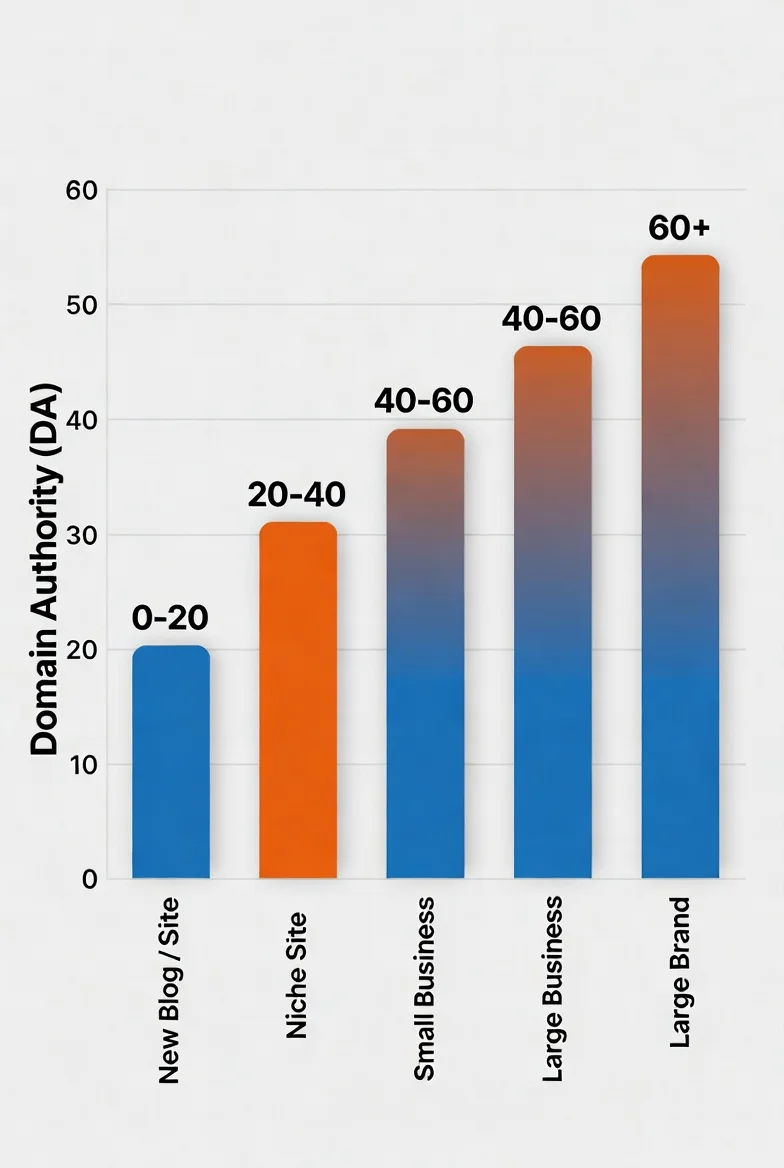
Different industries have very different authority baselines.
- Local services often compete between 10 and 25
- Affiliate niches usually range from 20 to 40
- Finance and health often sit above 50
- News and media exceed 70
Trying to match global publishers in a local niche wastes resources. Smart SEO focuses on beating the local average, not the global giants.
How to Check Domain Authority Without Getting Confused
Many tools show authority scores. They all use different data but similar logic.
Popular tools include
- Moz Domain Authority
- Ahrefs Domain Rating: meaning, link strength score
- Semrush Authority Score
Use one tool consistently. Mixing scores creates confusion because each platform calculates differently.
Focus on trends instead of daily changes. Growth over time matters more than the exact number.
The Hidden Mistakes People Make With Authority Scores
Many websites fail because they misunderstand authority.
Common mistakes include
- Comparing your site to Wikipedia or Amazon
- Buying links just to increase the number
- Ignoring relevance in backlink building
- Panicking over small score drops
Authority grows slowly. Sudden spikes often signal risky tactics. Sustainable growth always looks boring but safe.
How to Improve Authority Without Risky Shortcuts

Safe authority growth comes from strategy, not tricks.
Effective methods include
- Publishing content that attracts natural links
- Earning mentions from niche websites
- Building relationships with bloggers and publishers
- Fixing technical SEO issues that block crawling
Avoid link networks and artificial link schemes. They raise numbers briefly, but damage trust long term.
How Content Quality Supports Authority Growth
High authority sites do not just have links. They have depth and usefulness.
Strong content characteristics
- Covers topics fully
- Answers search intent clearly
- Uses simple language for clarity
- Includes examples and real insights
When content solves problems, links follow naturally. Authority becomes a byproduct, not the target.
Authority Contribution by Link Type
| Link Type | Authority Impact | Notes |
| Editorial links | High | Natural citations from reputable sites |
| Guest post links | Medium | Works if relevant and contextual |
| Comment/forum links | Low | Often negligible or spammy |
| Social mentions | Medium | Can indirectly improve trust and visibility |
Insight:
Not all links are equal. Knowing which links actually move the needle helps you prioritize outreach and content strategy.
Authority Distribution vs. Average Score
- A single high DA link can inflate your average.
- Most links might still be low quality or irrelevant.
- Tools report an average, but Google evaluates the full distribution.
Takeaway:
Focus on building a balanced backlink profile, not just chasing big numbers. Consistency beats isolated wins.
Micro-Authority Boosts: Small Wins That Add Up
- Local mentions, niche directories, and small industry sites can build authority incrementally.
- Internal linking and structured content clusters amplify these micro-wins.
- Cumulative small authority sources often outperform a single large link over time.
Bottom line:
Authority growth is a marathon, not a sprint. Small, consistent actions compound into meaningful competitive advantage.
The Role of Internal Linking in Authority Flow
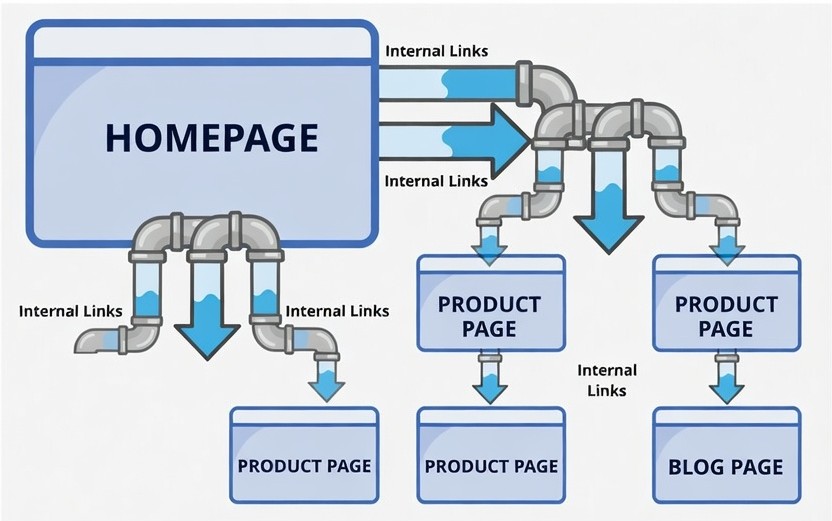
Authority is not just external. Internal links distribute trust inside your site.
Good internal linking
- Helps search engines understand the structure
- Pushes authority to important pages
- Improves user navigation
Think of authority like water. Without proper channels, it never reaches where it matters.
Can a Low Authority Site Still Rank?
Yes, and it happens often.
Low authority sites win by
- Targeting low competition keywords
- Matching intent perfectly
- Creating focused topic clusters
- Serving specific audiences better
Authority matters less when competition is weak, and relevance is strong.
A Practical SEO Stat You Should Remember
Studies show that pages ranking in the top three Google positions have, on average, 3.8 times more backlinks than positions four to ten. This highlights why authority supports rankings but does not replace content quality.
How AI Helps Analyze Authority Faster
AI tools simplify authority analysis by scanning backlinks, spotting toxic links, and identifying link gaps. They reduce manual work and help prioritize actions. For example, AI can suggest which competitor links are realistic targets and which ones are out of reach. This saves time and improves decision making without replacing human judgment.
People Also Asked
1. Everyone throws around “average DA.” I’m still a little fuzzy. Is it basically the overall link street cred of the websites I’ve got links from?
Yeah, exactly. It’s not your score; it’s the average score of the neighborhoods where your backlinks live. If they all live in nice neighborhoods (high DA), your average is high. If they’re in sketchy areas, your average is low.
2. My boss is breathing down my neck for a target number. What average DA should I be shooting for?
You gotta push back on that. There is no magic number. Tell your boss, “I need to know who we’re competing with first.” A score of 35 could be crushing it in our niche or getting destroyed, depending on who else is playing.
3. I just pulled a report, and our biggest competitor’s average DA is way higher than ours. Is our SEO totally screwed?
Nah, it’s not over. It just means they’ve been better at the relationship game for longer. Think of it as a wake-up call, not a death sentence. It shows you where the bar is and what kind of links you actually need to start earning.
4. To bump up our average, should my intern just go blast out emails to every big news site begging for a link?
Please, don’t do that. That’s a waste of everyone’s time. One solid, relevant link from a respected blog in our industry (even if their DA is just 40) is worth ten times more than a forced, irrelevant link from CNN. Relevance beats raw authority every single time.
5. Our average DA is pretty pathetic. What’s that really telling me about our old SEO guy’s work?
It’s telling you he probably took shortcuts. He likely used shady directories, low-quality guest post networks, or bought links. It means we need to do some cleanup and start building real connections instead of buying fake ones.
6. If we manage to get this average number up, will we automatically jump to page one?
I wish it were that easy. Think of a high average DA like having a really strong foundation for a house. It’s critical, but you still need to build the actual house (great content) and make sure the plumbing works (site speed, UX). Without those, you just have a nice foundation in an empty lot.
7. Our average DA looks decent, but our traffic is still flat. What gives?
The average can lie. You could have one amazing link from Forbes (DA 90) and then ninety terrible links from spam sites (DA 1). That gives you a decent average, but Google sees the junk. You need to check the distribution—you want most of your links in the “good” zone, not all the weight on one superstar.
8. Is it worth my time to check if this average is moving every month?
Yeah, but don’t obsess over tiny blips. Look at the three-month trend. Is it slowly crawling up? Good, our outreach is working. Did it suddenly drop? Red flag, we might have gotten some toxic links or been hit by an algorithm update. It’s a direction finder.
9. Honestly, average domain authority feels kind of abstract. What’s a simpler, real-world goal we can set?
Forget “average DA” for a second. Let’s set this goal: “This quarter, let’s get our content mentioned or linked to by five websites that our customers actually read and trust.” That’s the human goal. The average DA will follow.
10. So, what number should I actually be looking at instead of the average DA?
Look at your “Referring Domains” count, but filter out the junk. Focus on how many unique, legitimate websites are linking to us. Our job is to make that number of quality referrers go up month after month. That’s the real work.
Why Strategic SEO Beats Chasing Numbers
Ultimately, understanding your Average Domain Authority is about seeing the invisible playing field. This metric is your reality check. It shows if you’re building real influence or just making noise. Stop chasing a score and start building the trust and relationships it represents. This is where a strategic partner like Postspack adds clarity, turning this insight into an actionable plan that builds genuine authority and drives consistent rankings.