Few things feel more painful to an SEO expert or site owner than watching their rankings crash overnight. One day, your website is getting strong traffic — the next, it’s buried deep in search results. Often, the reason is a bad backlinks penalty from Google.
Google may see it as an attempt to cheat its algorithm when your backlink profile includes spammy, irrelevant or manipulative links. This can lead to a major drop in organic visibility and authority. But here’s the good news: with the right recovery plan, you can fix it, regain your trust score and protect your site from future penalties.
Understanding the Bad Backlinks Penalty
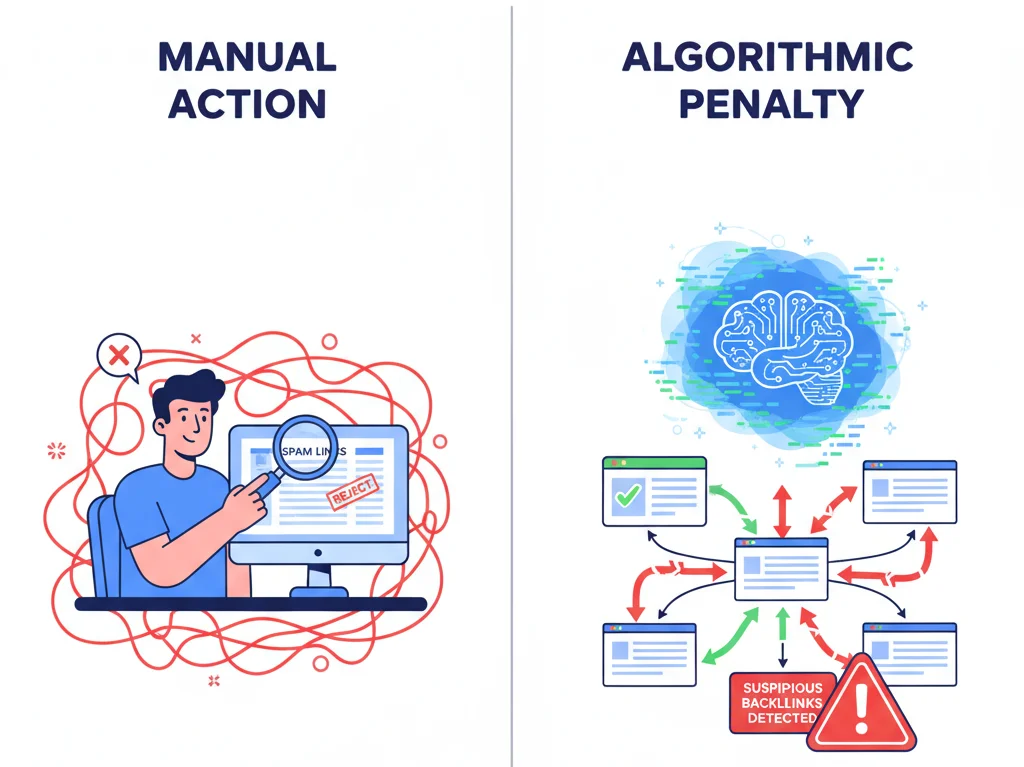
A bad backlinks penalty happens when Google detects unnatural link-building practices pointing to your site. These can actually come from paid link schemes, automated link farms or even spammy guest posts on unrelated domains.
There are two main types of penalties you might face:
- Manual Action:
When Google’s human review team identifies manipulative links and applies a direct penalty. You’ll see a “Manual Action” notification in your Google Search Console. - Algorithmic Penalty:
Triggered automatically by Google’s algorithms (like Penguin) when toxic links reduce your site’s credibility.
Both result in ranking drops, traffic loss and reduced authority — but both can also be reversed with the right recovery strategy.
How to Identify Toxic Backlinks and Their Impact
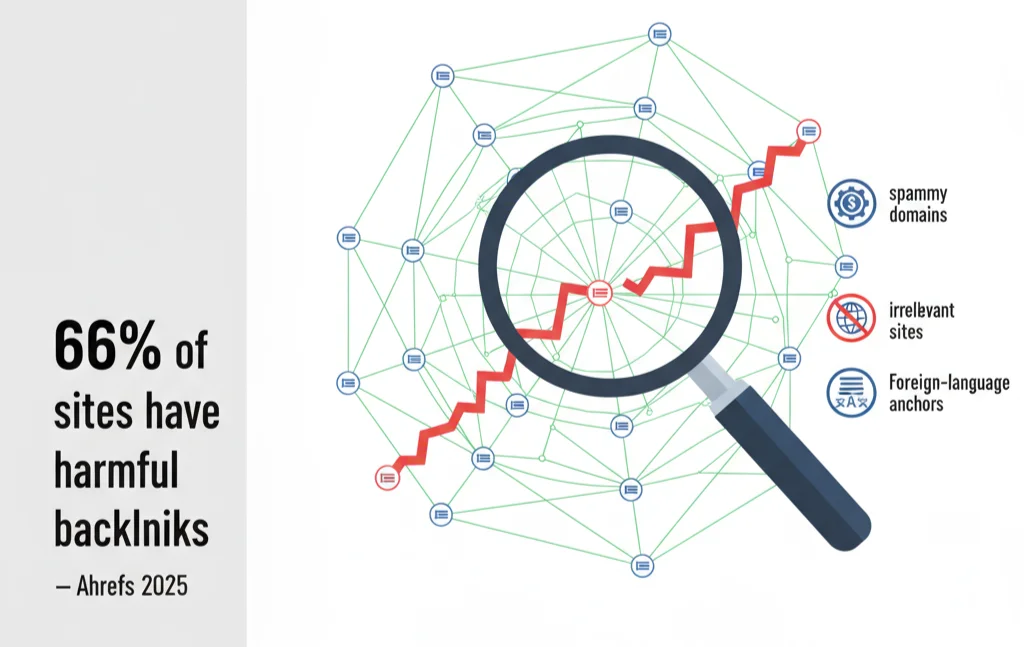
You need to know what kind of links are hurting you before you can fix the issue. Here’s a quick and easy overview from us for you of how to recognize harmful backlinks and their effects.
Signs You Might Be Facing a Penalty
| Symptom | Possible Cause |
| Sudden drop in organic traffic | Algorithmic penalty |
| Notification in Google Search Console | Manual action |
| Decline in domain authority | Poor link quality |
| Links from irrelevant or foreign sites | Link spam |
| Slow recovery despite new content | Toxic backlink profile |
According to Ahrefs,
More than 66% of websites have at least one harmful backlink that could trigger ranking issues.
How Toxic Links Affect Your SEO
- They lower your domain trust and reduce your ranking power.
- They waste your crawl budget by connecting your site to irrelevant or spammy pages.
- They actually send negative quality signals that can confuse Google’s algorithm.
By performing a backlink audit with tools like Ahrefs, Moz, or SEMrush, you can spot suspicious domains, low-quality directories, and spammy anchor text patterns early.
Steps to Recover from a Bad Backlinks Penalty
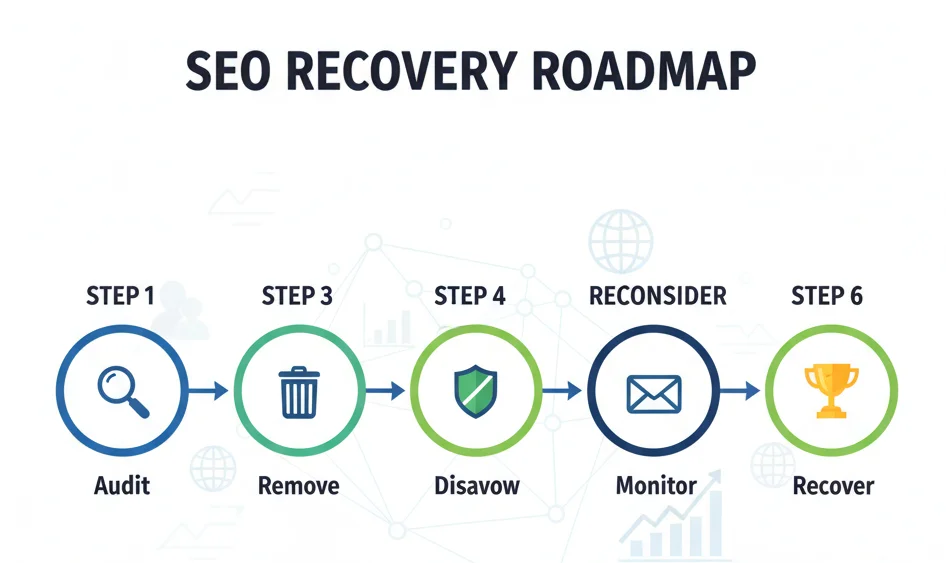
Recovery isn’t instant, but it’s achievable with consistency. Follow these actionable steps to restore your rankings:
1. Conduct a Complete Backlink Audit
- Use Google Search Console and third-party tools to list all inbound links.
- Filter out irrelevant, low-authority or duplicate links.
- Flag links from non-contextual guest posts or automated networks.
2. Request Link Removal
Reach out to webmasters of the sites hosting bad links and politely ask for removal. Keep records of your requests — this helps when filing reconsideration requests later.
3. Use Google’s Disavow Tool
If removal requests fail, upload a list of bad domains to Google’s Disavow Tool to signal that you don’t want those links considered in ranking decisions.
4. Strengthen Your Content Quality
Update weak pages, add expert-level resources and interlink to authoritative pages on your site. Google values expertise and original value over quantity of backlinks.
5. Submit a Reconsideration Request (if manual action)
If you’ve received a manual penalty, go to your Search Console, explain your cleanup process and show proof (emails, disavow file, audit report). Keep it transparent and concise.
6. Track Recovery Metrics
| Metric | Monitoring Tool | Goal |
| Organic traffic | Google Analytics | Gradual upward trend |
| Backlink quality | Ahrefs or Moz | Fewer spammy links |
| Manual action status | Search Console | “No issues detected” |
| Keyword rankings | SERP tracking tool | Reclaim previous positions |
With steady cleanup and quality publishing, most sites begin to recover within 2–3 months.
Preventing a Future Bad Backlinks Penalty

Your SEO can only stay strong if your backlinks stay clean. One careless link from a low-quality site can quietly cause a bad backlinks penalty and undo months of progress. The key is to grow links naturally and stay relevant.
To learn exactly how to build safe, relevant backlinks that strengthen your authority without risking penalties, read our guide on earning safe backlinks naturally
- Focus on Relevance, Not Numbers
- Don’t chase every backlink you can find. A few good ones from trusted websites in your field are far better than a pile of random links.
- When your backlinks come from content that connects with your topic, Google sees your site as part of that trusted space.
- It’s not about how many people link to you — it’s about who does.
- Keep Anchor Texts Simple and Natural
- Use anchors that sound like something a real person would say.
- Keyword-heavy phrases can make your links look forced or even suspicious.
- Mix things up with natural expressions — it keeps your profile balanced and human.
- Let Good Content Do the Work
- The easiest way to earn genuine backlinks is through content people want to share.
- Create something that helps, teaches, or surprises. Case studies, real data, or visual explainers work great.
- When people find value, they link to you without being asked. That’s how strong, natural authority is built.
- Audit Your Links Regularly
- Don’t wait for a problem to show up. Check your backlinks every few months.
- Remove or disavow anything that looks suspicious, outdated, or irrelevant.
- A small cleanup today can save you from major ranking drops later.
- Choose Partners You Can Trust
- If you’re hiring help, look for honesty and transparency.
- Avoid agencies that promise hundreds of links overnight — they’re usually cutting corners.
- Teams like Postspack focus on genuine, relevant backlinks that protect your brand while helping you grow steadily.
- Their methods are slow, safe, and built to last — exactly what Google rewards.
Frequently Asked Questions
1. Just how bad are a few toxic backlinks?
2. What’s the real-world difference between the two penalty types?
3. Give it to me straight—how long for a comeback?
4. Is the Disavow Tool my secret weapon?
5. Can’t I just build awesome links to drown out the bad?
Final Thoughts
Recovering from a bad backlinks penalty takes time and care, but it’s completely doable. Once you identify the toxic links and rebuild with clean, relevant ones, your rankings can bounce back stronger than before.
SEO success isn’t about collecting links — it’s about earning trust. Every authentic backlink you gain tells Google your content deserves to be seen.
If you’re ready to protect your site’s future, explore Postspack’s link-building services. Their proven, safe strategies help you rebuild authority the right way — without risking another penalty.