Everyone wants fast SEO results, but the slow climb tempts people to chase shortcuts. That temptation is where the black hat linkbuilding enters the chat. It’s the risky playbook that promises rankings now but can torch your site later. Before you consider those shady tactics, you need to see behind the curtain and understand exactly why search engines hunt this stuff down and what you should do instead.
The Dark Side In Plain Sight
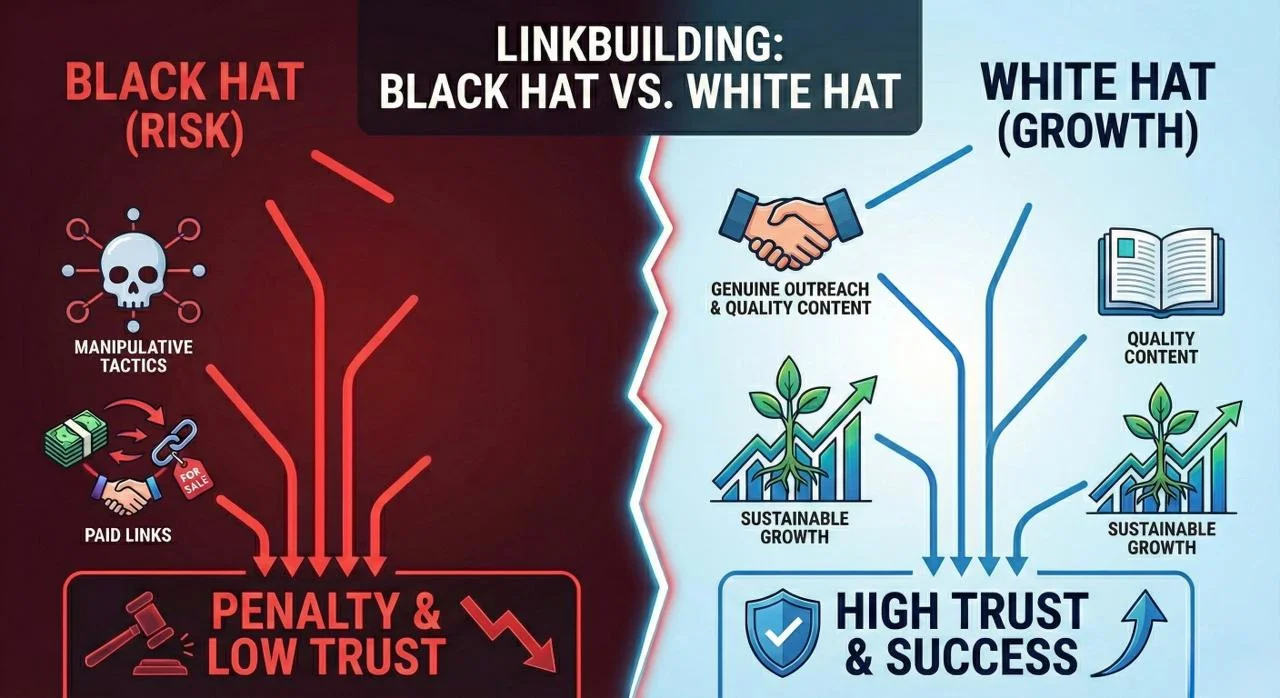
Many people hear the term and think it is an easy cheat code. But here is what sits underneath the shiny promise of fast growth.
- Manipulative link schemes created only to fool search algorithms
- Networks of fake websites linking to each other
- Automated comment spam injected into random blogs
- Paid backlink farms that sell hundreds of links with zero real authority
- Strategies that create traffic spikes but destroy long term trust
These tactics may look clever from afar, but they ignore everything that makes a backlink valuable, including relevance, quality, trust, and user benefit.
A recent Industry Survey revealed that nearly 78 percent of marketers admit they have tried at least one risky SEO tactic early in their careers. That number alone is enough to show how common the struggle really is.
What Makes These Tactics So Risky
If you are weighing your options, here are the real dangers you need to consider before taking that step.
- Google actively tracks unusual link patterns and issues penalties
- Your rankings may drop overnight after an algorithm update
- Bad links can affect your entire domain reputation
- Brands using risky methods often lose partnerships and collaborations
- Penalties require months of cleanup, disavows, and reputation rebuilding
Search engines reward expertise and natural authority. Anything that feels artificial eventually collapses.
Why People Still Get Attracted To Fast Link Schemes
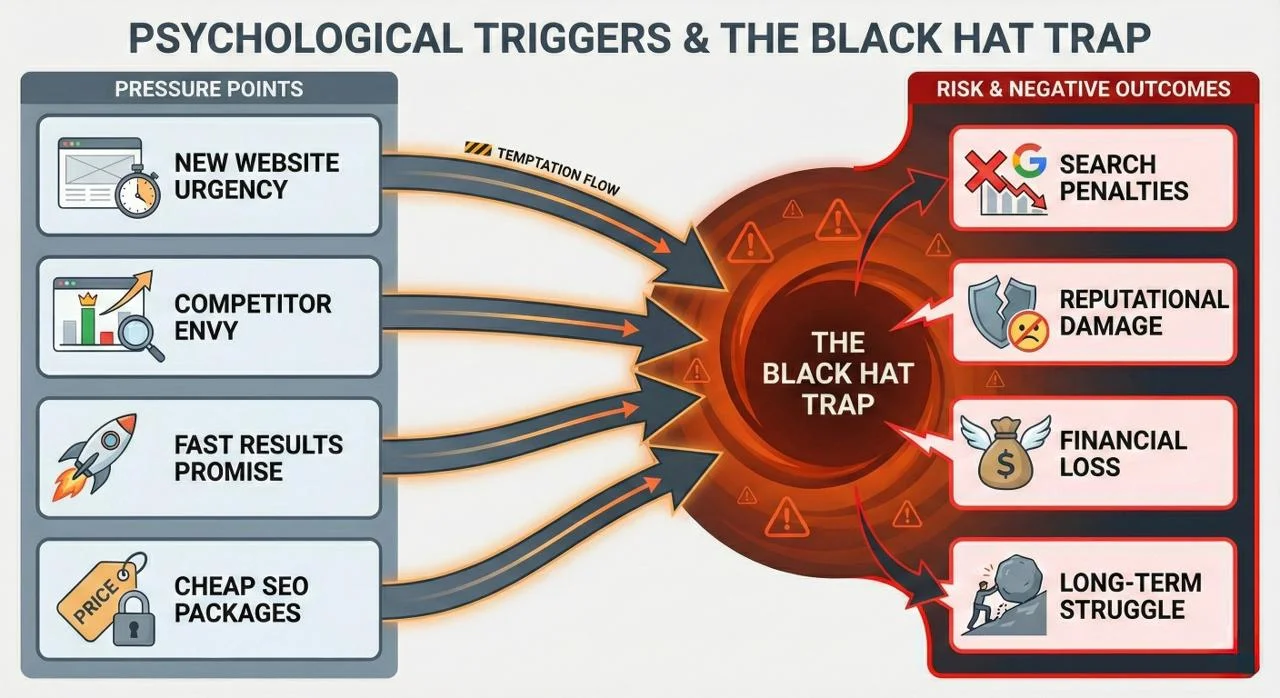
Even with the dangers, many site owners still fall into shortcuts. Understanding why helps you avoid making the same mistakes.
- New websites struggle to get natural links
- Competitors push aggressive ranking timelines
- Some agencies promise unrealistic results
- The appeal of instant authority feels too good to resist
- People misunderstand how Google measures credibility
The harsh truth is that shortcuts give temporary boosts but long term damage.
Smarter Alternatives That Actually Work Long Term
Here is where real SEO strategy kicks in. These are the methods that build authority without risking penalties.
- High quality guest posting on niche relevant blogs
- Expertly written resource pages that earn organic citations
- Digital PR with interviews, data pieces, and stories journalists love
- Linkable assets such as tools, templates, and original research
- Authentic outreach to websites that genuinely align with your niche
Each one is slow and steady, but they form the foundation of long lasting rankings.
These ethical strategies align perfectly with modern white hat link building techniques that focus on authority, relevance, and long-term rankings.
Real World Example That Shows The Difference
Imagine two websites launching at the same time. One buys five hundred backlinks from a shady marketplace. The other publishes authoritative content and earns mentions from niche blogs and resource pages.
Six months later, the first site sees sudden traffic drops while the second continues climbing with stable, natural growth.
This difference illustrates why search engines prefer real editorial signals over manipulated schemes.
Advanced Breakdown: Black Hat Linkbuilding vs Ethical Link Building
| Feature | Ethical Link Building | Risky Shortcut Tactics (Black Hat Linkbuilding) | Practical Example | Impact Level |
| Content Quality | High-value, original, helpful content | Thin, duplicated, or automated content | In-depth guide vs 300-word spun post | Very High |
| Link Source Authority | Links from DR 40–90+ trusted sites | Links from PBNs, hacked sites, spam farms | Guest post on a niche site vs PBN directory | High |
| Longevity | Stays valuable for years | Usually temporary before being removed | Natural editorial link vs deindexed PBN link | Very High |
| Algorithm Safety | Completely safe and compliant | High risk of penalty or deindexing | Earned resource link vs mass automated blasts | Very High |
| Traffic Quality | Relevant, buyer-intent visitors | Random, unqualified, or bot traffic | Users from niche sites vs irrelevant forums | High |
| Cost | Medium investment with long-term ROI | Cheap at first but costly after penalties | Paying for writers vs link packages | Very High |
| Brand Reputation | Builds trust and authority | Damages brand image and credibility | PR mentions vs spam pattern links | Very High |
| Scalability | Scales easily with consistent content | Hard to scale without raising flags | 10 strong backlinks vs 500 automated ones | Medium |
| Index Stability | Links stay indexed long-term | Links often removed or deindexed | Quality articles stay indexed for years | Very High |
| Conversion Impact | High due to relevant audiences | Low because traffic is irrelevant | Niche review article vs random blog comment | High |
| Penalty Risk | Zero | Very High | Manual action for unnatural links | Very High |
| Time to Impact | Moderate and steady | Fast but unstable | Organic ranking climb vs overnight spike | Medium |
| Suitable For | Long-term, serious brands | Short-lived or churn-and-burn sites | Company building authority vs throwaway domains | Very High |
| Examples | Guest posts, HARO, digital PR, resource links | PBNs, comment spam, directory blasts | Forbes link vs 10,000 spam comments | Very High |
How To Build Authority Without Playing Dangerous Games
Here are the strategies used by top ranking brands that avoid penalties and still grow fast.
- Create data based content that earns natural mentions
- Pitch stories and insights to journalists
- Use broken link outreach to offer replacements
- Build helpful online tools that attract organic attention
- Work with trusted partners like Postspack whose services focus on sustainable authority building
These approaches give you control without inviting dangerous risks.
The Turning Point You Need To Understand
Shortcuts fail. They try to trick a system meant to protect users. Search engines reward real value, not schemes.
Knowing how black hat linkbuilding works is your key to avoiding it. This understanding protects you and points you toward lasting results.
- It’s a trap, not a tactic. These schemes create a fragile house of cards. One algorithm update can wipe out your entire search presence overnight.
- You’re fighting the system’s core purpose. Search engines exist to surface helpful, trustworthy sites. Black hat linkbuilding directly attacks that trust, guaranteeing an aggressive response.
- It steals focus from real work. The time and money spent on shady links should be invested in creating content that actually earns respect and genuine backlinks.
Stop looking for a backdoor. Master the front gate. Sustainable success isn’t slower; it’s just permanent.
The Safer Road To Strong SEO Performance
You do not need shortcuts to win in search. What you need is strategy, consistency, and support from trusted partners who understand long term growth.
This includes expert help from services like Postspack that focus on ethical outreach, quality content, and authority based link acquisition. When you invest in smart strategies, you protect your brand while building results that actually last.
People Also Asked
1. Everyone defines it loosely. What specific, concrete actions will actually get me penalized?
2. I see shady sites ranking all the time. If it’s so risky, why does it seem to work for them?
3. Google can’t possibly review every link. How do their algorithms actually spot a manipulative link?
4. Let’s say I get hit with a penalty. What’s the actual, grueling process of recovering?
5. Can a competitor sabotage me by building black hat links to my site?
6. After a penalty is lifted, is my site permanently “marked” in the system?
7. What’s a common “grey hat” tactic that people convince themselves is safe, but is really playing with fire?
8. I need real authority fast. What’s the most aggressive white-hat strategy to compete without the risk?
9: If I hire an SEO agency, how can I be sure they’re not using black hat linkbuilding and risking my site?
10: What’s the single biggest mindset shift needed to avoid the temptation of black hat linkbuilding?
Final Thoughts
When you understand how search engines think, you stop chasing tricks and start focusing on progress that compounds over time. The temptation of black hat linkbuilding may feel strong in the beginning, but the long term cost is far greater than the quick win. Real SEO is built on credibility, relevance, and strategic growth. Stay patient, stay smart, and explore professional solutions like Postspack to support your long term success.