Most link-building advice is a recycled list of tactics that stopped working years ago. You’re not here for another article telling you to “create great content” or “build relationships.” You want a real-world, actionable plan. This collection of organic link building tips cuts through the noise to give you strategies that deliver rankings, not just theory. We’re Postspack, and we’ve moved the needle for hundreds of clients—here’s how you can do the same.
The Golden Rule: Stop Chasing Links, Start Earning Them
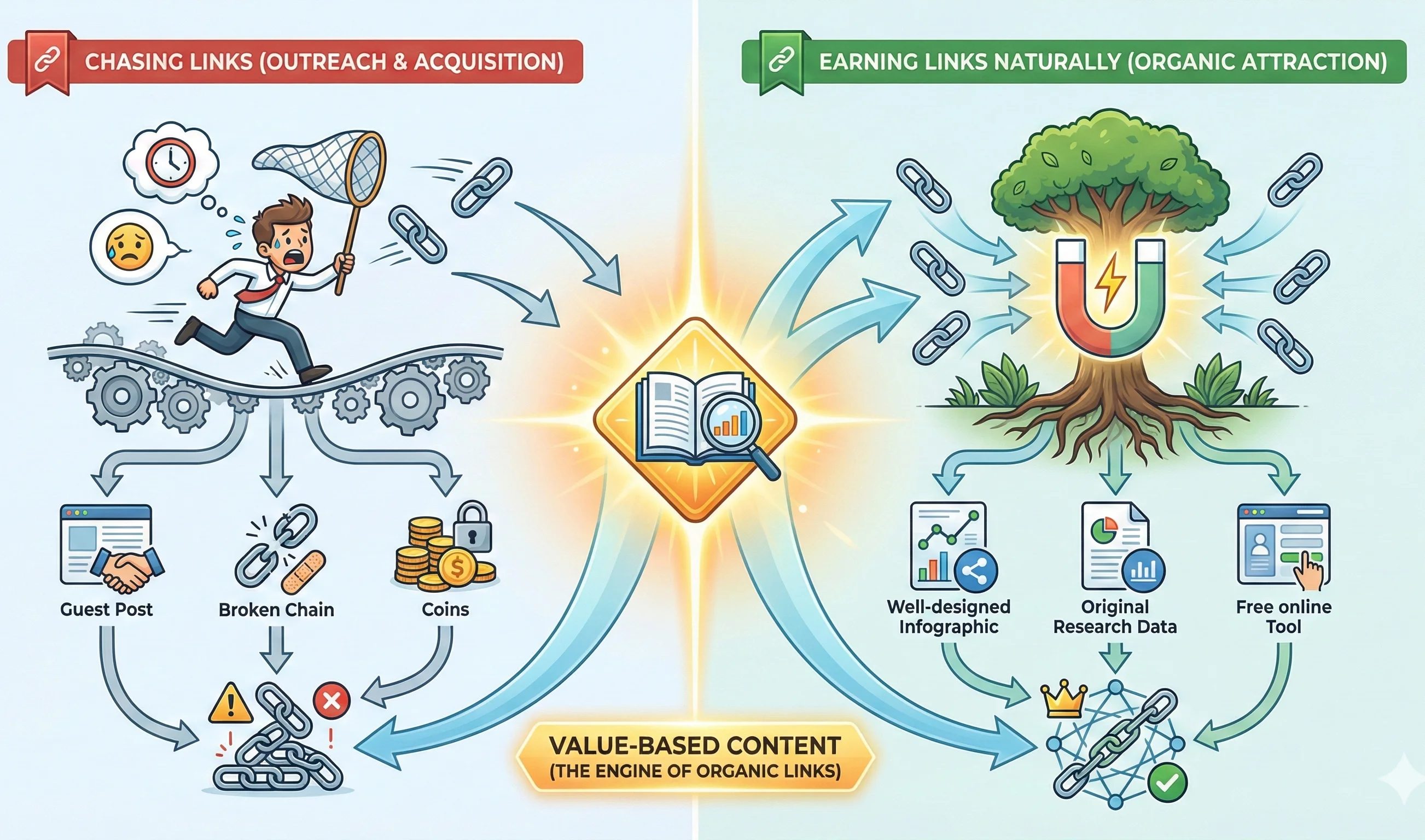
Here’s the secret nobody tells you about organic link building tips: the best links aren’t built, they’re earned. This isn’t just wordplay.
Think about your own browsing habits. When was the last time you genuinely linked to another site? It was probably because of that resource:
- Saved you hours of research or work
- Provided data you couldn’t find anywhere else
- Solved a problem you’d been struggling with
- Explained something so clearly it became your go-to reference
This is the core principle behind all effective organic link building. Stop asking “how can I get more links?” and start asking yourself, “how can I become the resource everyone can’t help but reference?”
The most powerful organic link building tips all stem from this single concept: become so valuable that links become a natural byproduct of your expertise.
To keep your strategy safe and future-proof, combine these ideas with proven whitehat link building techniques that Google consistently rewards.
A recent analysis of 1 MILLION search results found that 66.5% of all pages have zero backlinks. This means that the opportunity is massive for those who know how to execute.
Create Content That Commands Links
Forget creating more content. Your mission is to create fewer, better assets that demand links through sheer value. These are the content types that consistently break through the noise and earn natural citations.
Data-Driven Studies That Reveal New Insights
Original research isn’t just about collecting data—it’s about telling a story nobody else can. When you become the primary source, you attract links from journalists, researchers, and industry leaders who need your data to support their own work.
- Why it works: Establishes your authority as a knowledge leader
- Real results: One client’s survey on remote work trends generated 57 backlinks and 3 media features in 90 days
- Pro tip: Focus on surveying your industry’s pain points—the data gap is usually larger than you think
Build Powerful Content That Lasts
Create the resource you wish existed when you were learning your craft. Comprehensive doesn’t mean long—it means complete, accurate, and constantly updated.
- Why it works: Becomes the default reference that everyone bookmarks
- Real results: A 15,000-word local SEO guide now earns passive links from .edu and .gov domains
- Pro tip: Include multiple formats (video, infographics, checklists) to cater to different learning styles
Problem-Solving Tools That Experts Actually Use
Build utility-based assets that save time, money, or headaches. These tools become embedded in your industry’s workflow, earning consistent links over the years.
- Why it works: Provides immediate, tangible value that users remember
- Real results: A simple SaaS valuation calculator attracted 200+ referring domains in 18 months
- Pro tip: Focus on solving one problem exceptionally well rather than multiple problems poorly
Asset Types and Their SEO Impact
| Asset Type | Development Time | Link Velocity | Long-Term Value |
| Original Research | 4–8 weeks | High initial surge | Moderate (requires updates) |
| Definitive Guide | 6–12 weeks | Steady accumulation | Exceptionally high |
| Interactive Tools / Calculators | 8–16 weeks | Slow but consistent | Extremely high |
| Data Studies & Trend Reports | 6–10 weeks | Fast during release cycles | High, strong for annual updates |
| Infographics | 1–3 weeks | Quick bursts from social shares | Moderate |
| Expert Roundups | 2–4 weeks | Fast due to contributor promotion | High if updated yearly |
| Case Studies | 2–6 weeks | Slow but targeted | Very high in B2B niches |
| Templates & Checklists | 1–2 weeks | Slow but evergreen | High, excellent for continuous organic links |
| Free Courses / Mini-Academies | 6–12 weeks | Slow initial growth | Extremely high (authority builder) |
| Whitepapers / eBooks | 4–10 weeks | Moderate | High, especially for gated content |
| Comparison Pages | 1–2 weeks | Moderate | High as long as competitors stay relevant |
| Tool-Based Resource Hubs | 12–20 weeks | Slow but powerful | Extremely high |
| Industry Benchmark Reports | 8–14 weeks | High during release | High for annual cycles |
| Original Surveys | 3–6 weeks | High if data is unique | High if refreshed annually |
The common thread? Each asset solves a specific problem for a specific audience while establishing your authority. This combination makes linking feel natural rather than forced—the ultimate goal of any organic link building strategy.
Remember: One remarkable asset outperforms dozens of mediocre pieces. Quality trumps quantity every time in the world of organic link building tips.
Master the Art of Strategic Outreach
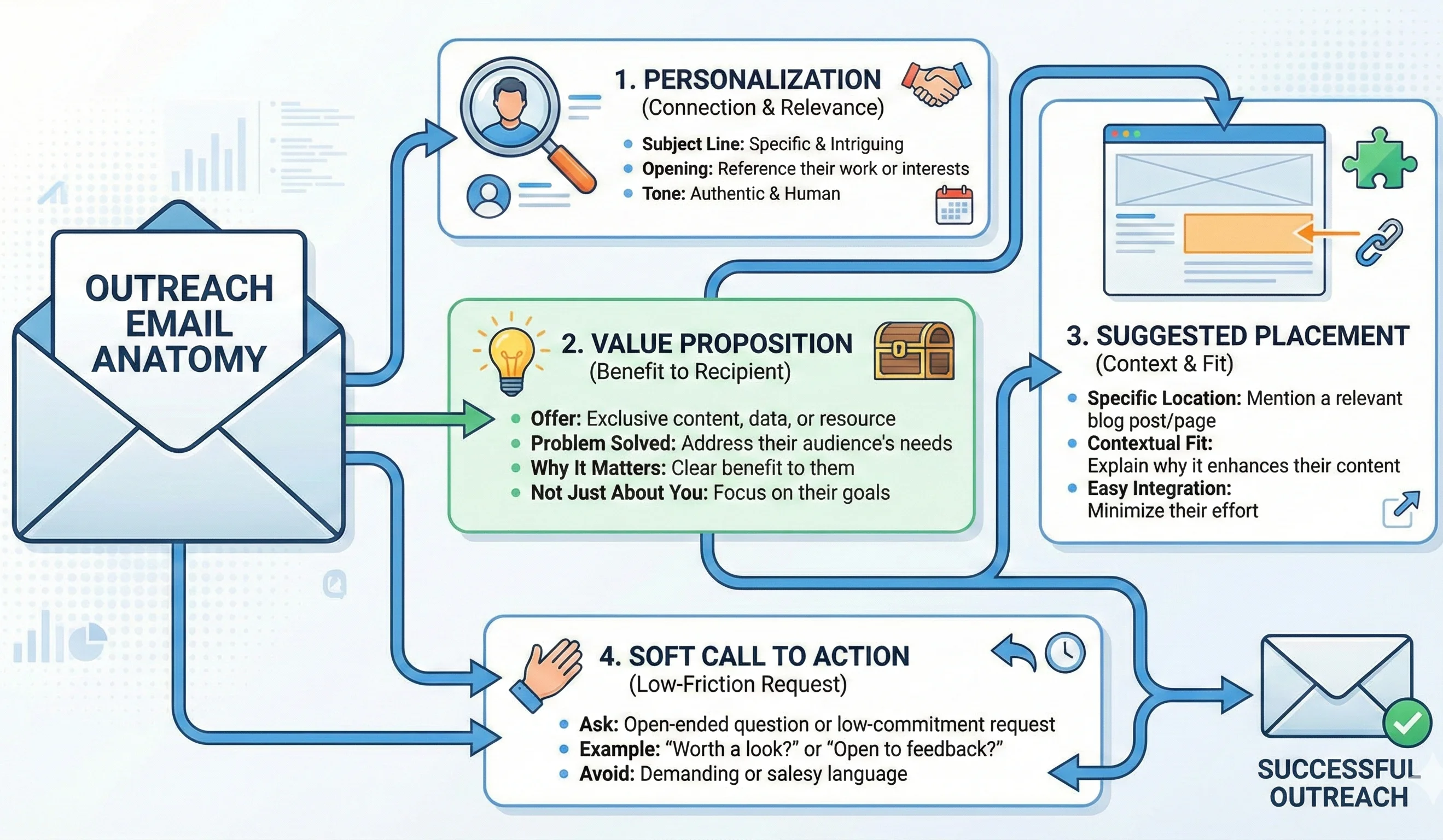
Creating a masterpiece is pointless if no one sees it. Outreach is not about blasting generic emails. It’s about personalized, value-driven communication that builds bridges.
The Postspack Outreach Framework That Gets a Definite Reply Rate:
1. Identify Warm Prospects: Use tools like Ahrefs to find websites that have already linked to content similar to yours. These sites have proven they value outbound resources.
2. Craft the Perfect Email: Ditch the templates. Personalize every single message. Reference a specific article they wrote, compliment their insight, and clearly explain how your content provides unique value to their audience.
3. Make a Clear, Humble Ask: Don’t demand a link. Suggest your resource as a helpful addition. The tone should be that of one professional helping another provide better information to their readers.
Leverage Digital PR for Authority Links
Go beyond blogger outreach. Digital PR positions you as an expert source for journalists, securing high-authority links that are otherwise nearly impossible to get.
- Help a Reporter Out (HARO):
Respond to journalist queries with insightful, expert commentary. A well-crafted response can land you a feature in major publications like Forbes or Entrepreneur, complete with a powerful dofollow link.
- Source and Data Journalism:
When you publish original research, create a dedicated “Press & Data” page. Then, proactively pitch your findings to reporters covering your industry. You’re not asking for a link; you’re offering them a story.
Comparison of Modern Link Building Strategies
| Strategy | Primary Goal | Effort Required | Long-Term ROI |
| Creating Link-Worthy Assets | Passive link acquisition | High | Exceptional |
| Strategic Outreach | Active link promotion | Medium | High |
| Digital PR & Expert Positioning | Authority + media links | High | Exceptional |
| Unlinked Mention Reclamation | Quick-win link recovery | Low | Medium |
| Guest Posting (Value-Driven) | Build authority + contextual links | Medium | High |
| Resource Page Outreach | Earn placement on curated lists | Low–Medium | Medium–High |
| Podcast Guesting | Build authority + natural brand links | Medium | High |
| HARO / Journalist Outreach | Earn editorial links from media | Medium–High | High |
| Content Syndication | Broader reach + passive links | Low | Medium |
| Skyscraper Technique | Replace outdated or weaker pages | High | High |
| Broken Link Building | Replace dead resources with yours | Medium | Medium–High |
| Community-Driven Promotion (Reddit, Quora, Niche Forums) | Brand awareness + indirect links | Low | Medium |
| Partnership & Co-Marketing Campaigns | Mutual promotion + shared links | Medium–High | High |
| Testimonials & Case Studies | Earn links from brands you use | Low | Medium |
| Scholarship & Grant Campaigns | Brand authority + EDU links | High | High |
Organic Link Building Tips: Capitalize on Low-Hanging Fruit
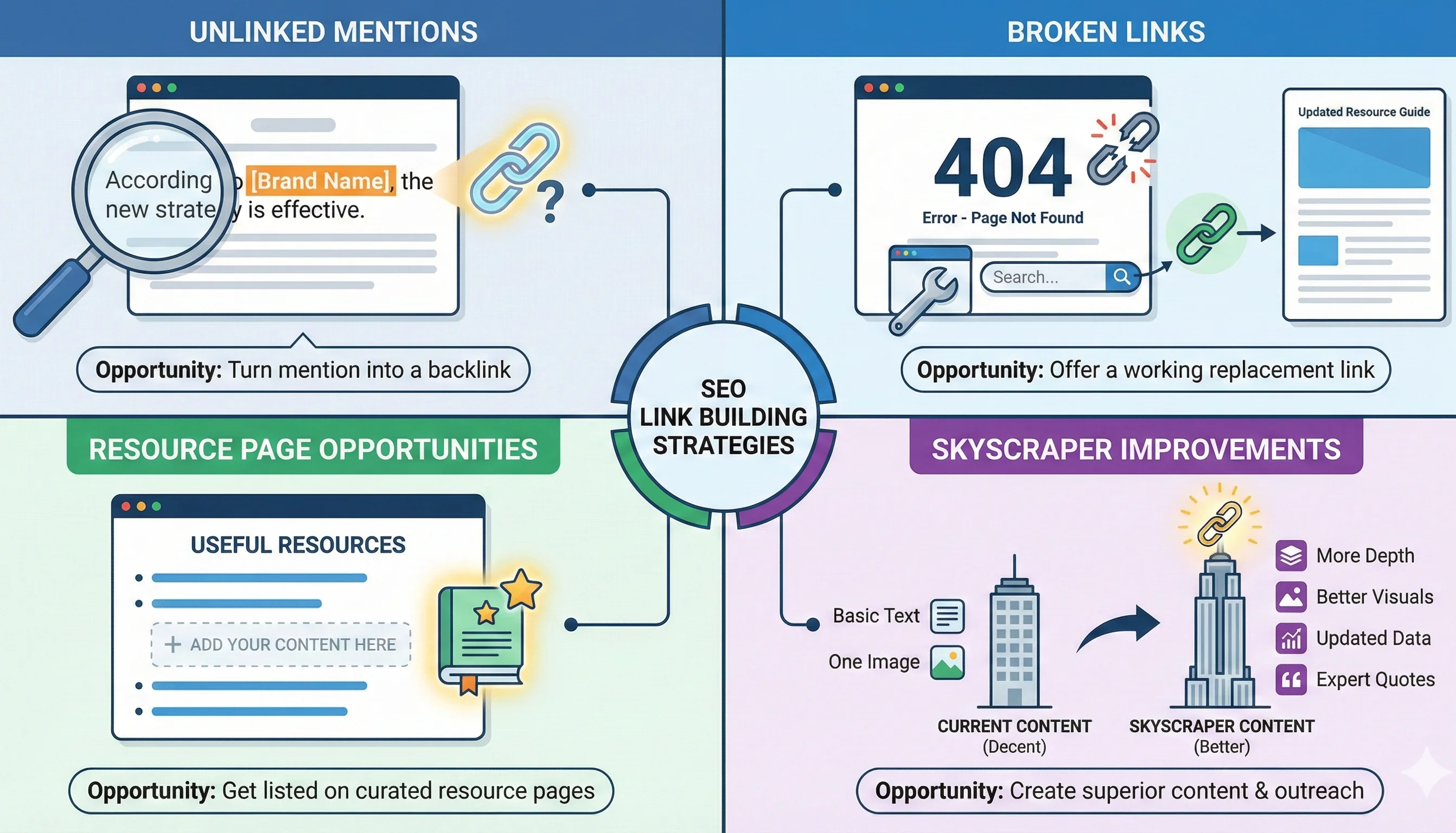
While you work on big campaigns, don’t ignore the simple wins that accumulate over time.
- Reclaim Unlinked Brand Mentions: Set up Google Alerts for your brand name. When you find a mention without a link, a friendly email can convert it into a valuable link over 40% of the time.
- The Skyscraper Technique 2.0: Find a popular article in your niche, create something objectively better—more comprehensive, better designed, more up-to-date—and then reach out to everyone who linked to the original, showing them your superior resource.
- Resource Page Link Building: Hunt for “Resources” or “Useful Links” pages on industry educational sites and suggest your comprehensive guide as a valuable addition for their students or readers.
Frequently Asked Questions
1. What is the fundamental difference between organic link building and traditional link building strategies?
Simply, Organic link building focuses on earning links through value creation, while traditional methods often involve transactional or technical approaches.
2. How can I measure the success of my organic link building campaign beyond just counting links?
Track referral traffic, domain authority growth, and improvements in keyword rankings for your linked pages.
3. What are the most common mistakes that prevent content from earning natural backlinks?
Creating superficial content, failing to promote it strategically, and targeting the wrong audience.
4. How does the quality of a referring domain impact the value of an organic backlink?
A link from a high-quality, relevant site carries significantly more weight than multiple links from low-quality directories.
5. What role does content freshness play in maintaining the link-earning potential of existing pages?
Google truly favors regularly updated content, and fresh material is more likely to be cited as a current authority.
6. Can a new website with low domain authority realistically compete in organic link building?
Yes, by focusing on hyper relevant niches and creating exceptional content that fills the actual knowledge gaps.
7. How important is link diversity within a comprehensive organic link building strategy?
Crucial. A natural backlink profile includes a mix of links from different domain types, industries, and content formats.
8. What is the single most important factor that makes a piece of content naturally linkable?
It has the ability to solve a specific and pressing problem better than any other available resource.
Final Words
Understanding organic link building tips is one thing—executing them consistently is what separates ranking content from the rest. This is where strategy meets scale. While the principles of creating exceptional value remain fundamental, implementing them effectively requires expertise most businesses develop over years—or partner to achieve.
This is the foundation of Postspack’s expert link-building services. We transform the philosophy of earning links into a systematic process—building your authority with the precision and consistency that algorithms reward.