If you are serious about scaling your business or website visibility, you must master building outreach campaign the right way. Outreach is not just about sending messages or emails. It is truly about creating connections that open doors to partnerships, backlinks, collaborations and sales. According to HubSpot, personalized outreach emails get 45% higher reply rates than bulk ones. This proves that relationships built through thoughtful communication drive better and faster results.
Stop Shouting And Start Connecting
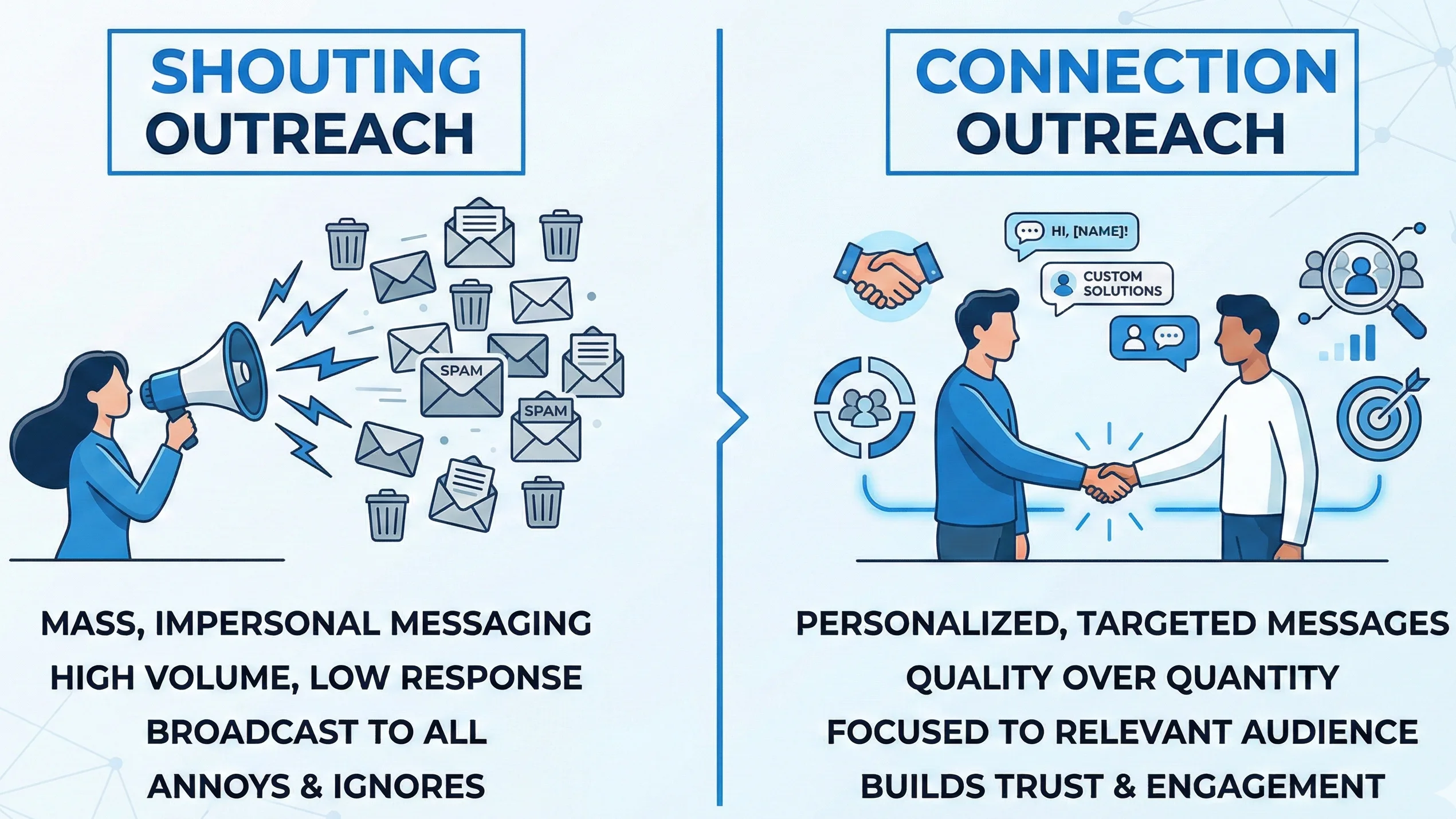
An outreach campaign is a carefully and actually a planned effort to contact people or businesses that can help you reach your goals. It can be about getting backlinks, guest posts, sales leads, or partnerships. When done correctly, outreach brings recognition, traffic, and authority.
A strong campaign focuses on three pillars:
- Clear purpose
- The right audience
- Personalized communication
These three elements make every message worth reading and responding to.
Stop Being Invisible. Outreach Turns on the Lights.
Outreach is the engine for modern growth. It’s the strategy that moves your content from the shadows into the spotlight, building the authority that drives both SEO and revenue.
- SEO Supercharger: Earn backlinks from trusted sites. Google sees these as votes of confidence, pushing your rankings higher.
- Unbeatable Authority: Gain featured spots on industry sites. This third-party validation builds trust that advertising can never buy.
- Direct Growth Engine: Unlock partnership opportunities and attract high-value clients who already know and trust you.
Success all comes down to building outreach campaign the right way and focusing on genuine connection over spammy volume to ensure sustainable growth.
Core Framework for Building Outreach Campaign the Right Way
Here is a clear framework that professionals follow when planning outreach.
| Step | Goal | Action | Tools to Use |
| 1. Research | Understand your audience | Find relevant websites, influencers, or decision-makers | Ahrefs, LinkedIn, Hunter.io |
| 2. Personalize | Create unique messages | Mention their work, achievements, or shared interests | QuickMail, Lemlist |
| 3. Offer Value | Focus on benefits | Share content, offer collaboration, or suggest an idea | BuzzStream, Mailshake |
| 4. Follow-Up | Reconnect respectfully | Send 2–3 spaced messages with added value | Gmail scheduler, CRM tools |
| 5. Track | Measure success | Review open, response, and conversion rates | Google Sheets, HubSpot |
This structure ensures your outreach is focused, professional, and measurable.
Crafting a Message That Gets Replies
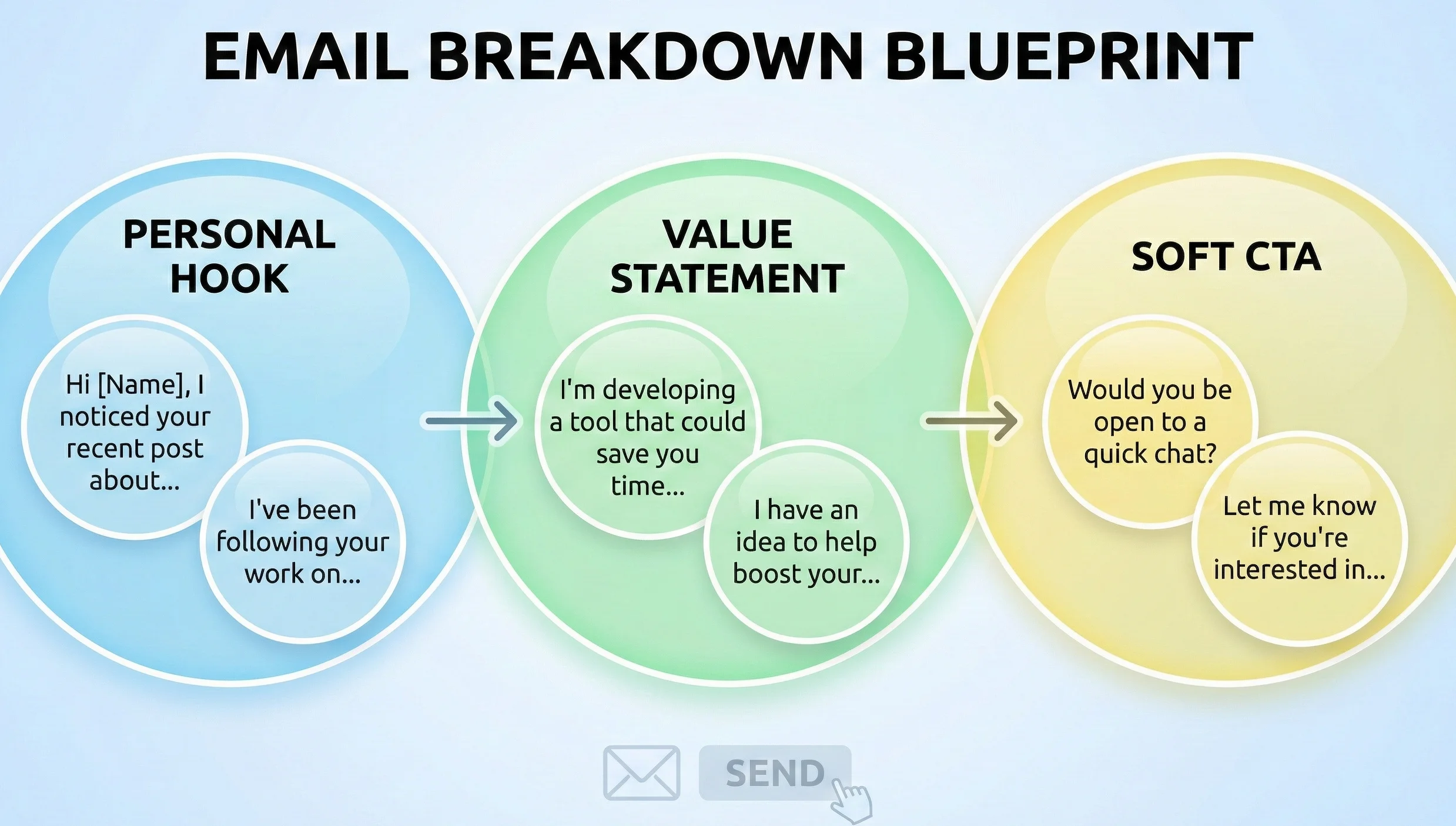
The most powerful outreach message feels natural and respectful. Instead of pushing your offer, guide the reader toward collaboration. A good formula is:
Personal Hook + Value Statement + Soft CTA
Example:
“I recently read your guide on sustainable marketing. Your point about long-term brand reputation stood out. I’ve done similar research that could support your article. Would you like me to share it?”
Messages like this sound human, not automated. They create curiosity and invite conversation.
Emotional Intelligence in Outreach (Rarely Discussed but Highly Effective)
Many marketers focus only on tools and templates, forgetting the human element. Emotional intelligence (EQ) in outreach can dramatically increase success.
When writing, consider:
- Empathy: Understand what challenges your recipient faces
- Tone Awareness: Match their communication style
- Respect: Acknowledge their time and expertise
- Authenticity: Avoid over-selling
When people feel respected, they respond positively. This emotional connection makes your outreach stand out even in crowded inboxes.
Common Outreach Mistakes that Limit Success
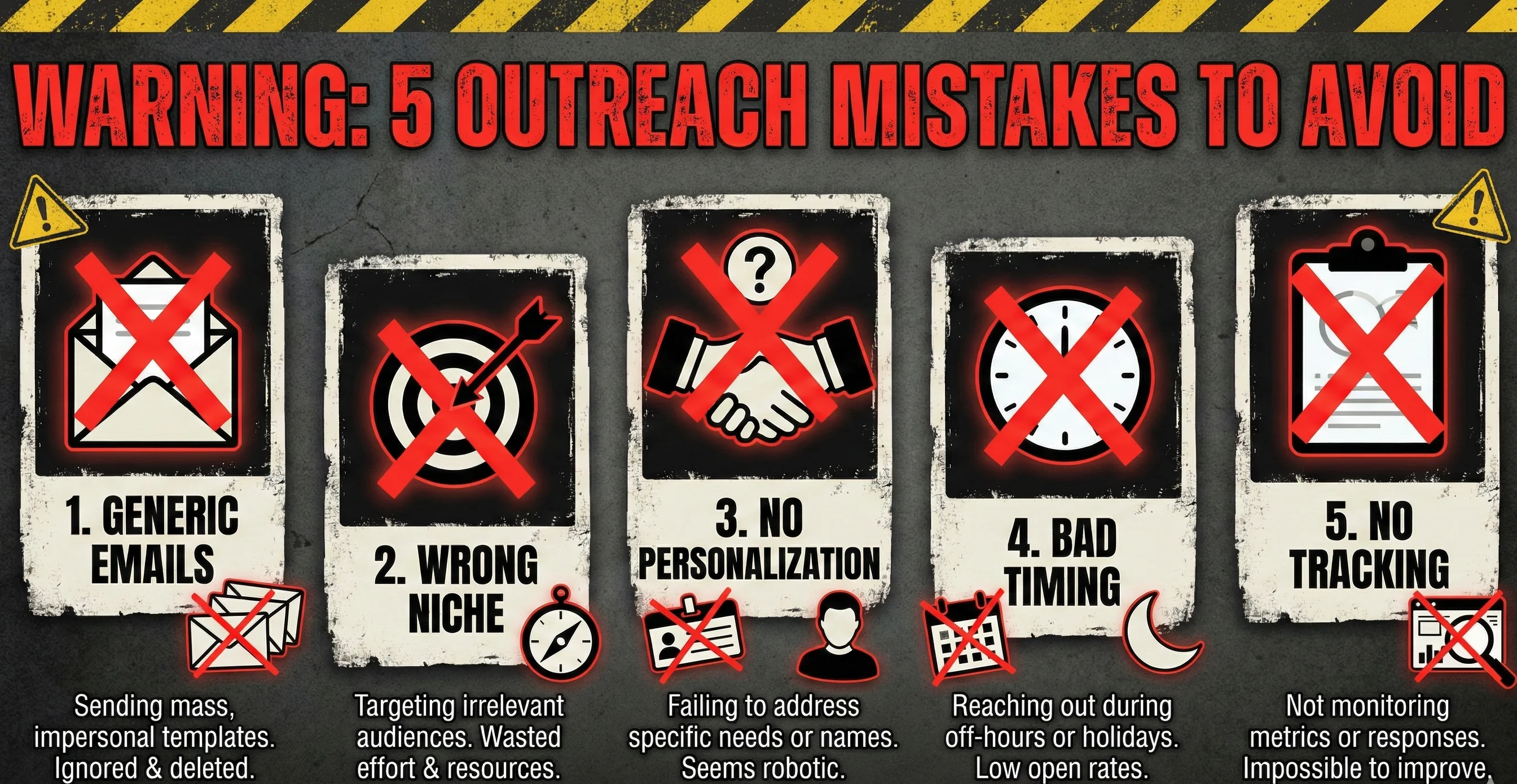
Even experienced professionals make simple errors that kill response rates.
- Sending the same message to everyone
- Targeting people outside your niche
- Ignoring personalization and context
- Following up too soon or too late
- Not tracking what works
The key is learning from every campaign and improving your tone, timing, and targeting continuously.
The Psychology Behind Response Rates
Why do some messages get instant replies while others go unnoticed? It often depends on three psychological triggers:
| Trigger | Description | Example |
| Reciprocity | People respond when you offer value first | Share a useful resource before making a request |
| Social Proof | Mention shared connections or credibility | “I noticed we both collaborated with XYZ brand” |
| Curiosity | Create intrigue without clickbait | “We ran an experiment that tripled outreach replies—want to see how?” |
These small triggers make readers stop, think, and reply.
Testing and Optimizing Your Outreach
Improvement comes from data. Every message, follow-up, and timing can be tested.
Test these elements regularly:
- Subject lines (curiosity vs. clarity)
- Email length (short vs. detailed)
- Tone (formal vs. friendly)
- Send time (morning vs. afternoon)
According to QuickMail’s internal data, campaigns that test two message versions increase response rates by up to 27% compared to static outreach.
Building Long-Term Relationships After Outreach
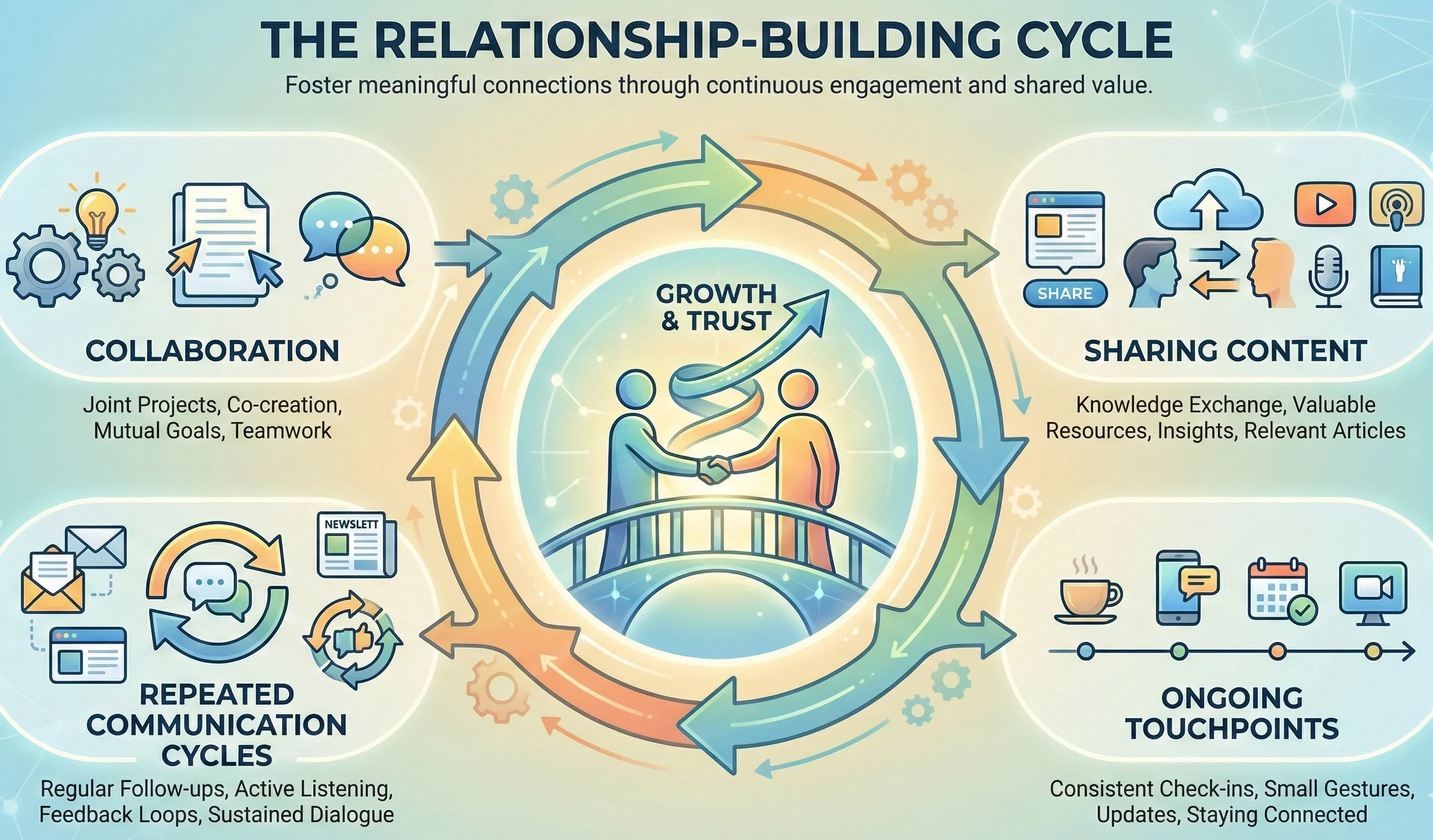
Most brands forget that outreach does not end after one reply. It begins there. Real success comes from nurturing these connections.
Ways to build long-term trust:
- Keep in touch after collaboration
- Share their content on your platforms
- Provide feedback or help on their projects
- Offer new ideas for future partnerships
Strong relationships lead to continuous opportunities without starting from zero every time.
Pro Tip Section (New & Rare Insight)
Use “Outreach Mapping” Before Contacting Anyone
Create an “Outreach Map” listing:
- Contact name
- Their role
- Common interest
- Possible value offer
- Follow-up status
This organized map acts as your personal dashboard. It keeps your campaign clean and ensures you never lose track of important relationships.
Key Metrics to Measure Success
Track every part of your outreach to know what drives results.
| Metric | Purpose | Ideal Range |
| Open Rate | Checks email subject performance | 40–60% |
| Reply Rate | Measures engagement | 10–25% |
| Conversion Rate | Tracks goal completion | 5–10% |
| Follow-Up Effectiveness | Evaluates secondary communication | 30–50% of total replies |
If your numbers fall below these averages, review personalization, timing, and audience targeting.
People Also Ask
1. How do I actually start an outreach campaign?
The first thing you should do is to stop overthinking it. Pick one person you’d genuinely like to connect with and write them a simple, human email. No templates, no fancy tools – just you reaching out to one person. That’s how every great campaign begins.
2. Why does my outreach feel so spammy?
It’s because you’re probably thinking about what you want instead of what they need. Read your last email – does it sound like you’re asking for something or offering something valuable? If it’s the former, that’s your problem right there.
3. How can I find someone’s professional email?
It’s better to start with their LinkedIn profile and company website. If you are not found, use an AI tool like Hunter.io. As a last resort, send a brief and professional LinkedIn message asking for their contact information.
4. How persistent should I be with follow-ups?
Look, if you don’t follow up, you’re leaving money on the table. The key? Make each one useful – share an article they might like or a new idea. Don’t just say “following up.”
5. What’s the real difference between outreach and spam?
Spam is when you blast 500 people with the same generic message. Outreach is when you carefully select 5 people and write each one a personal note. One feels like a conversation, the other feels like junk mail.
6. How can I personalize emails without spending all day on it?
It takes 2 minutes per person and makes all the difference. This approach is key to building outreach campaign the right way.
7. What numbers actually matter in outreach?
Forget opens and clicks. The only metrics that matter are: Are people replying? Are those replies positive? Are conversations turning into something real? Everything else is just noise.
8. Do I really need all those expensive outreach tools?
No. The tools can help later, but they can’t fix a bad strategy. Start simple, get the human part right first, then scale.
Final Thoughts
Look, forget the fancy playbooks. Real outreach isn’t a numbers game. It’s a people’s game.
You want to cut through the noise? Stop acting like a robot and start acting like a person who gives a damn. That’s the only secret to building outreach campaign the right way.
This is why teams bring like Postspack. They help you drop the generic scripts and make a real, human impact that people remember.
Forget blasting a thousand emails. Go for one real conversation. That single, genuine connection will always be the thing that actually moves the needle for your business.